Tornado Tracker by TornadoPath
- 4.8
- Rating
- 50.00K
- Installs
- Free
- Price

 Analysis by App-foxy
When severe weather is moving nearby, I do not want a decorative forecast screen. I want something that helps me notice a dangerous change quickly and decide whether I need to pause a trip, bring people indoors, or check on someone else. Tornado Tracker by TornadoPath is built around that narrower need. It is a free weather app from Ridge Labs LLC focused on live tornado warnings, high-definition radar, and phone call alerts when storms threaten your area.
That focus makes it more interesting than a general weather app, but it also makes the choice less straightforward. A normal forecast app is usually better for planning a week, checking temperatures, or comparing rain chances. This app is aimed at the tense part of weather awareness: watching a storm develop and trying not to miss an important warning. After looking at how it fits into everyday use, I see it as a specialized safety tool rather than a complete replacement for a standard weather service.
What Tornado Tracker is designed to do
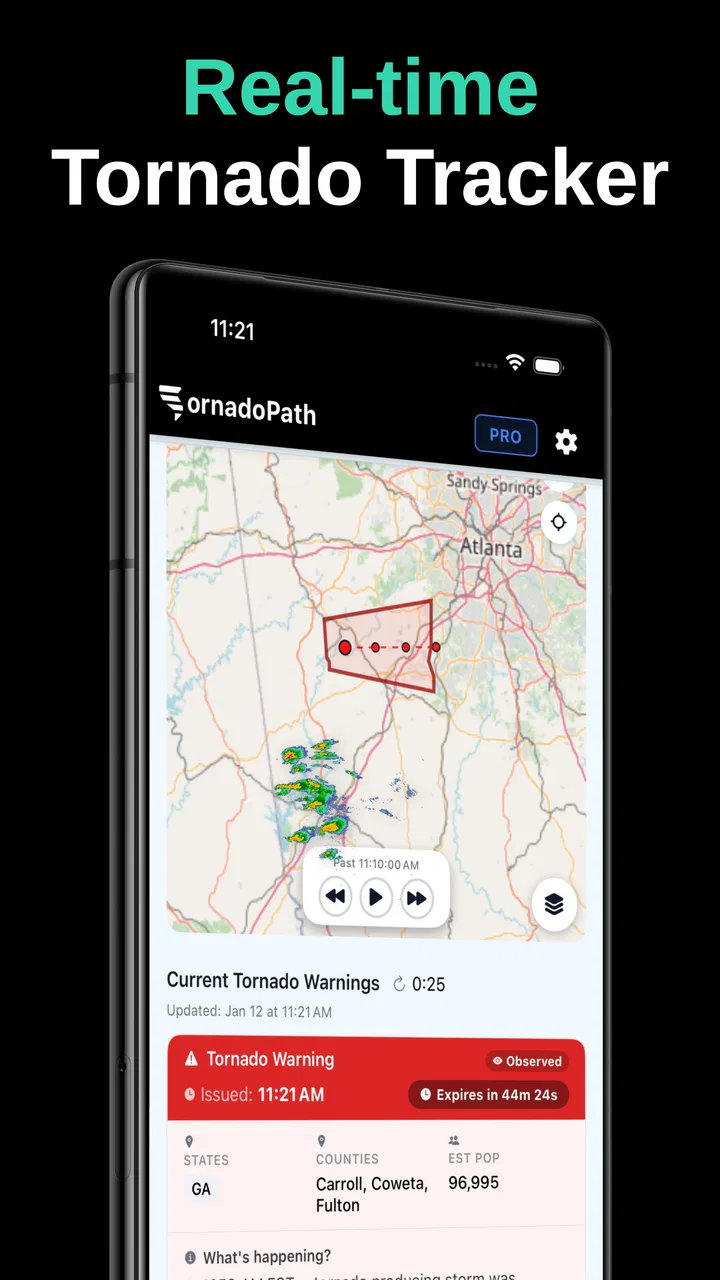
The app’s store short description is simply “Tornado Tracker,” and that is a fair description of its purpose. Its store summary points to three central functions: live tornado warnings, HD radar, and phone call alerts when storms threaten you. Those elements suggest a workflow based on attention and urgency rather than casual browsing. You open it because weather may be turning dangerous, not merely because you want to know whether to wear a jacket.
You May Also Like

 Blood Strike: 2.5 Anniversary
Blood Strike’s Loadouts Turn Every Drop Into a Tactical Gamble
A close look at Blood Strike’s custom loadouts: how fast access to signature weapons reshapes its battle royale rhythm, rewards preparation, and narrows the gap between fights.

 Pandora - Music & Podcasts
Pandora’s Music Is Easy to Start, but Harder to Recover
Pandora’s strength is its low-effort path from a seed to a station. Its weak spot is how much confidence it asks you to place in connection, setup, and quiet recovery.

 8 Ball Pool
 Is Built on Rivalries, Rematches, and Routine
A close look at the rivalries, rematches, shared routines, and unanswered safety questions that turn a quick pool match into a persistent mobile community.

 Samsung Music
’s Quiet Strength Is Playing What You Already Own
Its reach comes less from spectacle than from dependable access to a personal library. That simplicity is both the app’s strongest retention engine and its ceiling.

 AccuWeather: Weather Radar
AccuWeather Review: A Quick, Clear Forecast for Everyday Decisions
For everyday plans, the best forecast is the one you can understand quickly. AccuWeather makes rain timing, radar, and local conditions easy to act on, with a few trade-offs.

 Hill Climb Racing
Why Hill Climb Racing Still Turns Crashes Into One More Run
A tiny car, a bumpy hill and one more upgrade: Hill Climb Racing keeps resurfacing because its simple chaos makes every near-miss feel personal.
More From Our News Desk
View All News


I especially like that the concept combines warning information with radar viewing. A warning tells me that a serious weather event has been identified, while radar helps me understand the storm’s movement and surrounding conditions. Those are different jobs. One is about receiving an important signal; the other is about building context before deciding what to do next.
The app is listed as a weather application for Everyone, so its intended audience is broad. It can make sense for someone living in an area where tornadoes are a recurring concern, a parent who wants an extra alert channel, or a traveler passing through storm-prone regions. It is also relevant to people who spend time outdoors and cannot rely on casually checking a forecast every few hours.
At the same time, I would not treat it as a complete emergency-management system. A radar screen and an alert can support a decision, but they do not replace local instructions, official emergency communication, or sensible shelter planning. The most useful way to think about it is as one layer in a personal weather routine.
Cost, access, and the question of paid value
The app is free to download, which lowers the barrier to trying its basic experience. That matters for a specialized weather tool: I can install it before a storm season, see whether the interface suits me, and decide whether its warning workflow is useful without paying an entry fee.
There are in-app purchases listed from $39.99 to $149.99 per item. Those are substantial amounts compared with the expectation many people have for a weather app, so I would not recommend buying anything impulsively. The free access should be judged on its own, while any paid option should be considered only after the user understands exactly what it adds and how often they would use it.
This distinction is important because a free download does not automatically mean the whole experience is free. If you only need occasional storm awareness, the no-cost portion may be enough to test whether the app deserves a place on your phone. If you are considering a purchase, I would first use the free version during ordinary weather and then during a period when radar monitoring is genuinely relevant. The value depends on the practical benefit of the paid item, not on the presence of a large feature list.
I also would not compare the purchase range directly with a basic forecast app and assume the more expensive option is better. A general weather service may offer broader planning tools at no additional cost, while Tornado Tracker’s appeal is its narrower focus. Paying more only makes sense for someone who values that specialized warning workflow and can identify a concrete reason to upgrade.
How the radar and warning combination helps
One of the more useful habits I can imagine with this app is checking radar before relying on a warning alone. Suppose I am preparing to drive home and receive an alert about threatening storms. The alert gives me a reason to stop treating the forecast as background information. I can then open the radar, look at the storm’s position and movement, and decide whether to delay leaving, choose a different route, or stay inside until conditions are clearer.
That does not mean radar should be interpreted with false confidence. A screen can show a storm’s structure and direction, but it cannot turn me into a meteorologist. The practical benefit is situational awareness: I can see whether the weather is moving toward my area or whether the most intense activity is elsewhere. I would still give priority to official instructions and direct warnings.
Another useful workflow is checking the map before going to an outdoor event. Rather than looking only at a percentage chance of rain, I can watch for developing storm activity and keep a backup plan ready. This is a small but meaningful difference from ordinary forecast checking. The app is most valuable when it changes what I do, not when it simply gives me another screen to refresh.
Phone call alerts are also worth considering carefully. A call can be harder to overlook than a quiet notification, especially when the phone is in a bag, on a desk, or being used for another task. For someone responsible for children, older relatives, pets, or a work crew, that extra interruption may be useful. On the other hand, a call-based alert can feel intrusive if it triggers at inconvenient times or for situations that do not require immediate action from the recipient. I would treat it as an emergency-oriented channel, not a casual forecast reminder.
Where the app fits beside ordinary weather alternatives
Most people already have access to a general weather app. Those tools are usually more convenient for hourly temperatures, extended forecasts, sunrise information, and broad daily planning. If my main question is whether I need an umbrella tomorrow morning, I would not open a tornado-focused tracker first.
Tornado Tracker has a different role. Its value comes from concentrating attention on tornado warnings and storm monitoring. That specialization can be an advantage during an active weather situation because it reduces the temptation to scroll through unrelated forecast details. Instead of treating dangerous weather as one small card among many, the app places it at the center of the experience.
The trade-off is coverage of everyday needs. Someone who wants one app for temperatures, pollen, air quality, travel forecasts, and severe weather may prefer a broader service. Someone who already receives reliable official alerts and rarely watches radar may also find this app unnecessary. I would use it alongside a general forecast app rather than expecting it to replace every weather tool on my phone.
Practical limitations I would consider before relying on it
The first limitation is attention. A warning tool is only helpful if I notice the alert and have a plan for what to do next. Installing the app without deciding where to shelter, who needs to be contacted, or how to verify a warning leaves a gap between information and action. I would set up a simple personal routine before storm season instead of waiting for the first urgent alert.
The second limitation is interpretation. High-definition radar can look precise, but visual detail is not the same as certainty. Storm paths can change, and a colored map should not be used as permission to remain outside. The app can improve my awareness, but it cannot eliminate uncertainty. This is a key reason I would keep official local guidance in the loop.
The third limitation concerns the paid range. Since purchases can reach $149.99 per item, I would want a clear understanding of the benefit before spending. The free price is attractive for experimentation, but the existence of expensive optional items means the app should be evaluated in two parts: first as a free warning and radar tool, then separately as a possible paid service. A person who cannot explain what problem the purchase solves should skip the purchase.
There is also a practical question about whether phone calls fit the user’s life. For one person, they may be the strongest reason to use the app. For another, repeated interruptions may be frustrating, particularly if that person already has several alert systems active. I would avoid stacking every possible warning channel without a plan, because too many overlapping alerts can make it harder to recognize the message that truly requires immediate action.
Who is most likely to get real value?
I think the strongest audience is people who live in regions where tornado warnings are a realistic seasonal concern and who want a dedicated way to monitor storms. The app is also a sensible trial for households that need a more noticeable alert than a standard notification. A phone call can be especially relevant when a user is caring for someone else and cannot afford to overlook a serious warning.
It may also help people who make decisions around changing weather: outdoor workers, event organizers, travelers, and anyone responsible for moving a group indoors. In those cases, radar is not just something to look at for curiosity. It can support a decision about whether to postpone an activity or change plans before conditions become more dangerous.
For a casual user in a mild-weather area, the benefit is less obvious. If tornado risk is rare where I live and I already have dependable local alerts, I may not open a dedicated tracker often enough to justify paying for optional items. The free download still makes testing easy, but I would not keep it merely because every phone can hold another weather app.
I would also skip it as my only weather resource if I need detailed long-range planning or a broad set of environmental readings. Its identity is centered on tornado and storm awareness. A general forecast platform is likely the better primary choice for travel planning, gardening, commuting, or routine daily decisions.
Version, compatibility, and everyday usability
The current version is 5.0.6, and the app supports devices running Android 7.0 or later. That makes compatibility reasonably accessible for people using older Android phones, although I would still check how comfortably the radar display performs on the particular device before making it part of a serious warning routine.
The app has a 4.4 average from around 131 ratings, with 18 written reviews, and has passed 10K installs. Those figures suggest that it has attracted a real user base while remaining a relatively focused product rather than a universally used weather platform. I see the rating as encouraging, but not as a substitute for testing the alert experience myself. Weather apps are highly personal: an interface that feels clear to one person may feel distracting to another during a stressful situation.
Because the app is from Ridge Labs LLC and is listed for Everyone, it is easy to imagine it being used across a household. Still, I would involve the people who may actually receive the alerts. A warning workflow is only effective if everyone knows what a call or notification means and what action follows. That is a household habit, not something the app can create automatically.
A realistic storm-day routine
Imagine I am at work when the weather begins changing. I have plans to pick up a child and then stop at a store before going home. A phone call alert interrupts the afternoon and tells me that threatening storm activity is relevant to my area. Instead of continuing with the original schedule, I open the app’s radar to understand the broader situation, contact the people affected by the delay, and move toward a safer indoor plan.
In that scenario, the app’s value is not that it predicts every detail perfectly. Its value is that it breaks my normal routine at a moment when casually checking the weather might not be enough. The radar then gives me context for the next decision. I would still verify the situation through local official communication and follow any instructions, but the app has helped me react sooner.
A different scenario shows its limits. If I am planning a weekend trip several days away, a tornado tracker is not the only tool I need. I would want a broader forecast, road information, and destination-specific details. Tornado Tracker might become useful closer to departure if severe weather develops, but it would not be my complete planning solution.
My verdict on free use and optional spending
I would recommend trying Tornado Tracker if severe-weather awareness is a genuine concern and the idea of live radar plus phone call alerts matches the way you pay attention to warnings. The free entry point makes that trial reasonable. I would install it before an active weather day, explore the radar when conditions are calm, and decide whether the alert style is understandable rather than waiting until I am already under pressure.
I would be much more cautious about the in-app purchases. With items ranging from $39.99 to $149.99, paid value needs to be personal and specific. Someone who depends on dedicated storm monitoring may find a paid option worthwhile if it provides a benefit they will use repeatedly. Someone who only wants occasional reassurance should probably remain with the free access or use a general weather service and official alerts.
My final view is that this is a focused companion app, not a universal weather replacement. Tornado Tracker earns its place when fast storm awareness matters more than a broad forecast dashboard. I would choose it for a household, workplace, or outdoor routine where missing a serious warning could have real consequences. I would skip it if I only need ordinary daily forecasts, dislike interruption-heavy alerts, or cannot justify a potentially expensive optional purchase.
The best reason to use it is not the promise of having more weather information. It is the chance to create a clearer response when dangerous weather is approaching: notice the alert, inspect the radar, verify the situation, and act early. Used with that realistic expectation, the free app is worth testing. Used as a substitute for judgment or official emergency guidance, it is not enough on its own.
FAQs for Tornado Tracker by TornadoPath
01What features does Tornado Tracker by TornadoPath offer?
Tornado Tracker by TornadoPath provides users with real-time tracking of tornadoes, including detailed maps, alert notifications, and safety tips. The app also offers historical data and forecast models to help users prepare in advance. Its user-friendly interface allows for easy navigation and customization to focus on specific areas or alerts.
02Is Tornado Tracker by TornadoPath available for both Android and iOS devices?
Yes, Tornado Tracker by TornadoPath is available for download on both Android and iOS platforms. The app can be easily installed from the Google Play Store for Android devices and the Apple App Store for iOS devices, ensuring wide accessibility for all users.
03How accurate is the data provided by Tornado Tracker?
Tornado Tracker utilizes advanced meteorological data and cutting-edge technology to provide highly accurate and timely information. It sources data from trusted weather agencies and employs sophisticated algorithms to ensure users receive precise updates and alerts, making it a reliable tool for tracking severe weather events.
04Does Tornado Tracker require a subscription or in-app purchases?
Tornado Tracker offers a free version with essential features, but users can opt for a premium subscription to unlock additional functionalities such as advanced forecasting tools, ad-free experience, and more detailed alerts. This flexibility allows users to choose based on their specific needs and budget.
05Can Tornado Tracker be used internationally?
While Tornado Tracker is primarily designed for use in tornado-prone regions, it does offer some international coverage. The app provides global weather data, but the precision of alerts and forecasting is optimized for regions where tornadoes are more common. Users outside these areas can still benefit from the app's general weather tracking features.
Pros
- Real-time tornado alerts and updates.
- User-friendly interface and navigation.
- Detailed maps with storm paths.
- Customizable notification settings.
- Accurate weather forecasting tools.
Cons
- Requires constant internet connection.
- High battery consumption.
- Limited features in free version.
- Ads can be intrusive at times.
- Region-specific limitations may apply.

Tornado Tracker by TornadoPath
Gallery